

Green Infrastructure and Climate Resilience: Designing for London's Environmental Future in Lewisham
- Phasezero Design Studio
- Dec 4, 2025
- 2 min read

Updated: May 3
As London faces the realities of a changing climate, the need to embed green infrastructure into the city's growth has never been clearer. Lewisham, known for its rivers, parks, and strong community identity, is becoming an important focal point for exploring how nature-driven design can help create a more resilient urban future. Rising temperatures, heavier rainfall and increasing pressure on public spaces demand architectural approaches that place environmental performance at the core of development.
Lewisham's environmental character is strongly shaped by the Ravensbourne and the Quaggy, two river corridors that meander through residential neighbourhoods and local centres. These waterways offer valuable natural assets but also pose challenges when severe weather events occur. Low-lying areas face surface water flooding, while dense neighbourhoods experience intensified heat during the summer months. Alongside these concerns, the gradual loss of biodiversity and the strain placed on outdoor spaces highlight the importance of integrating ecological thinking into new development.
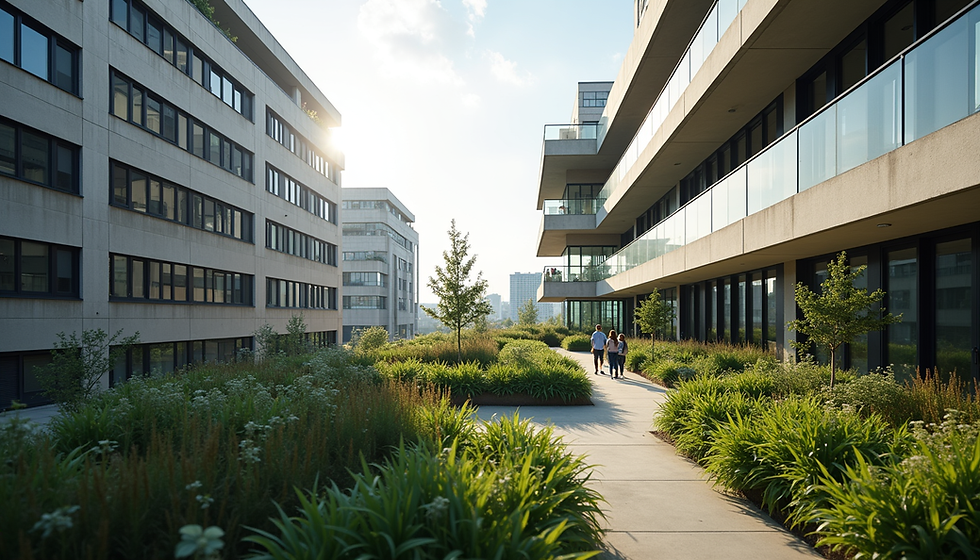
Green infrastructure offers a connected approach to these challenges. In Lewisham, this extends far beyond the simple addition of green spaces. It draws together systems such as rain gardens and bioswales that manage stormwater naturally, green roofs and planted façades that help reduce heat and support wildlife, the ongoing restoration of river edges to encourage biodiversity, and the transformation of unused land into community-managed green pockets. When these elements are designed to work together, they create healthier streets, improve air quality and strengthen the borough's ecological frameworks.
Architecture plays a central role in shaping how these systems operate. Designing with flood resilience in mind, for example, encourages the integration of permeable surfaces, landscaped attenuation areas and carefully considered building thresholds. Developments that take London's warming climate into account can use planting and natural shading to reduce overheating and lower energy use. When architects prioritise biodiversity from the outset, they create meaningful habitats for pollinators and birdlife, supporting the wider ecological network that runs through Lewisham's parks and river corridors. At the same time, green spaces designed for community use—whether shared courtyards, outdoor learning environments or small neighbourhood gardens—ensure that environmental improvements translate into social value.
The long-term benefits of this approach are wide-reaching. A borough with strong green infrastructure is better prepared for extreme rainfall and heatwaves, experiences improved public health and wellbeing, and nurtures richer urban biodiversity. Neighbourhoods become more pleasant and distinctive, with nature woven into everyday life rather than confined to isolated parks. This shift strengthens Lewisham's role in shaping a greener future for London as a whole.
For project teams working in the borough, success depends on adopting this mindset early in the design process. Environmental mapping, climate risk assessments and careful consideration of hydrology and ecology help guide strategies that are responsive and forward-looking. When green infrastructure is treated as a fundamental design driver rather than an optional enhancement, new developments contribute meaningfully to a resilient and sustainable urban fabric.
Lewisham's environmental future will rely on nature-based solutions that evolve with the climate. By integrating green infrastructure into every stage of planning and design, London can build neighbourhoods that are not only resilient but genuinely enriching for the people who live in them.


Comments