
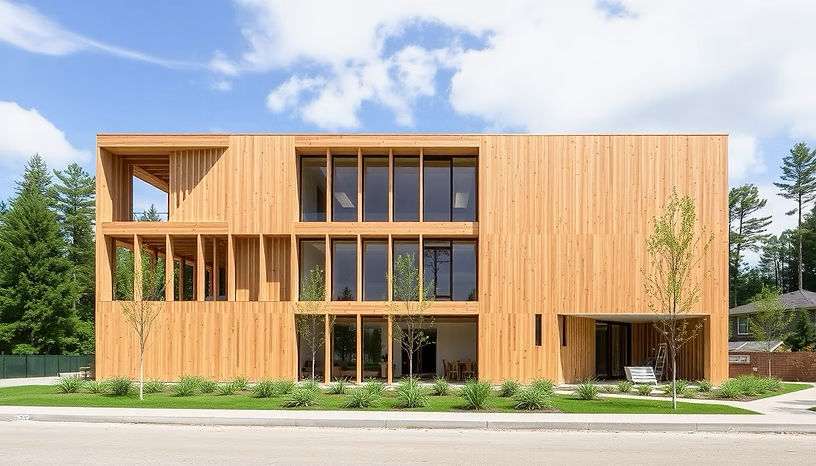
Mass Timber And Engineered Wood - The Future Of Sustainable Construction
- Phasezero Design Studio
- Nov 14, 2025
- 2 min read

Updated: May 6
Mass Timber Revolution: How Engineered Wood is Reshaping Sustainable Architecture
The construction industry is undergoing a significant transformation, and at the heart of this change lies an unexpected material: wood. Mass timber, particularly cross-laminated timber (CLT) and other engineered wood products, is revolutionizing how designers approach sustainable building. For Phase Zero Design, understanding this shift is crucial as we continue to champion bespoke design for a sustainable future.
What exactly is mass timber?
Unlike traditional timber framing, mass timber refers to large, solid wood panels engineered from smaller pieces of wood bonded together. Cross-laminated timber (CLT) is the most prominent example, consisting of layers of wood glued perpendicular to one another, creating panels of remarkable strength and stability. This innovation allows architects to use wood in applications previously reserved for steel and concrete, including multi-storey buildings, commercial spaces, and complex structural systems.
The environmental benefits are compelling. Wood naturally sequesters carbon dioxide during its growth, and when used in construction, this carbon remains locked within the building for decades. A single cubic metre of wood can store approximately one tonne of CO2, making mass timber buildings effective carbon sinks. Additionally, engineered wood requires significantly less energy to produce compared to steel or concrete, reducing operational carbon emissions from the outset. The manufacturing process is also more efficient, with minimal waste as offcuts are often repurposed into other products or bioenergy.
Beyond environmental credentials, mass timber offers practical advantages that appeal to both architects and builders. The lightweight nature of CLT panels means faster assembly on site, reducing construction timelines by up to 30 percent. This efficiency translates to lower labour costs and reduced disruption to surrounding areas. The precision of prefabricated panels also ensures superior quality control and fewer on-site errors, resulting in buildings that are both structurally sound and aesthetically refined.
Hybrid structures combining mass timber with steel or concrete are emerging as particularly innovative solutions. These hybrid systems optimize the strengths of each material: timber provides carbon sequestration and aesthetic warmth, while steel or concrete offers additional structural support where needed. This approach allows architects greater creative freedom whilst maintaining sustainability credentials.
The aesthetic dimension of mass timber deserves particular attention. The warm, natural appearance of exposed timber creates interior spaces that feel connected to nature, enhancing occupant wellbeing. For interior designers, this material offers opportunities to create spaces that are simultaneously modern, warm, and environmentally responsible. The visible wood grain and natural variations add character and authenticity that resonates with contemporary design sensibilities.
However, challenges remain. Mass timber construction requires specialised knowledge and skilled labour, which can be limited in some regions. Building codes and regulations are still evolving to accommodate these materials, though progress is accelerating. Initial material costs can be higher than conventional materials, though lifecycle analysis often demonstrates superior long-term value.
At Phase Zero Design, we recognise mass timber as a cornerstone of sustainable architectural practice. Whether incorporated into structural systems or featured as interior elements, engineered wood represents a tangible commitment to environmental responsibility without compromising on design quality or structural integrity. As the industry continues to evolve, mass timber will undoubtedly play an increasingly central role in creating buildings that are beautiful, durable, and genuinely sustainable.


Comments