

What it’s Possible to Build Without Planning Permission?
- Phasezero Design Studio
- Dec 8, 2023
- 3 min read

Updated: Jun 12
When considering home improvements, many homeowners wonder: “Do I need planning permission?” The good news is that in the UK, certain extensions, structures, and alterations fall under permitted development rights (PDR), meaning they can be built without a formal planning application. Understanding what qualifies is essential to avoid enforcement issues while making the most of your property.
Rear Extensions Under Permitted Development
Single-storey rear extensions can often be built without planning permission, subject to size limits:
Up to 3 meters deep for terraced/semi-detached houses
Up to 4 meters deep for detached houses
Maximum height restrictions apply, and extensions cannot extend beyond the rear wall of the original house by more than the limits stated.
Must maintain a minimum 2-meter distance from boundaries for single-storey extensions over 3 meters in height.
Tip: Always check your local council’s guidance to confirm dimensions and requirements.

Side Extensions
Side extensions are usually allowed under PDR if:
They do not exceed half the width of the original house.
The maximum height does not surpass the existing roof.
They are not located forward of the principal elevation.
Important: Side extensions in conservation areas or on listed buildings often require planning permission.
Loft Conversions
Many loft conversions fall under permitted development if:
No part of the conversion exceeds the highest part of the existing roof.
The volume of the original roof space is not exceeded (commonly up to 40 cubic meters for terraced houses and 50 cubic meters for detached/semi-detached houses).
Dormer windows may be installed if they meet size, positioning, and setback regulations.
Tip: Check whether your property has restricted permitted development rights, especially if in a conservation area.
Outbuildings and Garden Structures
Sheds, summerhouses, and home offices can often be built without planning permission, provided they meet these criteria:
Maximum height of 2.5 meters for dual-pitched roofs or 2.5 meters for flat roofs.
Cannot occupy more than 50% of the garden.
Must not be forward of the principal elevation or on land in front of the house.
Garden offices or studios for business use may require additional change-of-use approval.
Porches and Front Extensions
Small porches may fall under PDR if:
They do not exceed 3 square meters in area.
Maximum height of 3 meters.
Not within 2 meters of a boundary with a highway.
Larger front extensions generally require planning permission.
Solar Panels and Renewable Installations
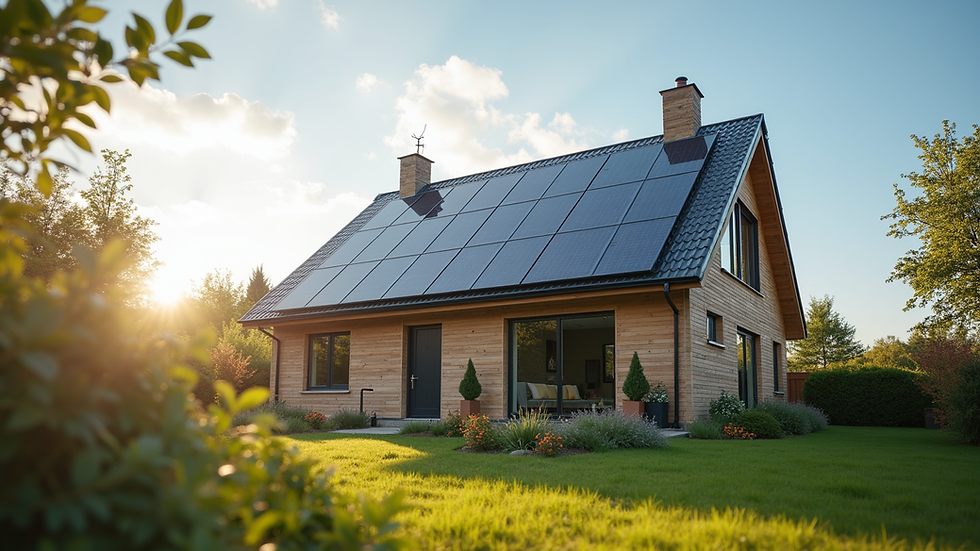
Solar panels can often be installed under permitted development, subject to:
Panels do not protrude more than 200mm from the roof slope.
Panels are below the highest part of the roof.
No panels on listed buildings or in conservation areas without approval.
Temporary Structures
Some temporary or mobile structures like carports, garden cabins, or greenhouses can be installed without planning permission if they meet size and location restrictions.
Restrictions and Exceptions
Permitted development rights may be restricted in certain situations:
Conservation areas, national parks, and areas of outstanding natural beauty
Listed buildings
Properties with Article 4 directions that remove certain PDR
Extensions that exceed height, volume, or proximity limits
Tip: Even if a project qualifies as permitted development, submitting a Lawful Development Certificate (LDC) can provide legal assurance that your work is compliant.
Conclusion
Understanding what it’s possible to build without planning permission can save homeowners time, money, and administrative hassle. Rear and side extensions, loft conversions, garden structures, small porches, and solar installations often qualify under permitted development rights, but restrictions and local variations must always be considered.
For peace of mind, consulting with a planning consultant or local council before starting construction ensures your project is fully compliant, avoiding enforcement notices and legal complications.

Comments