
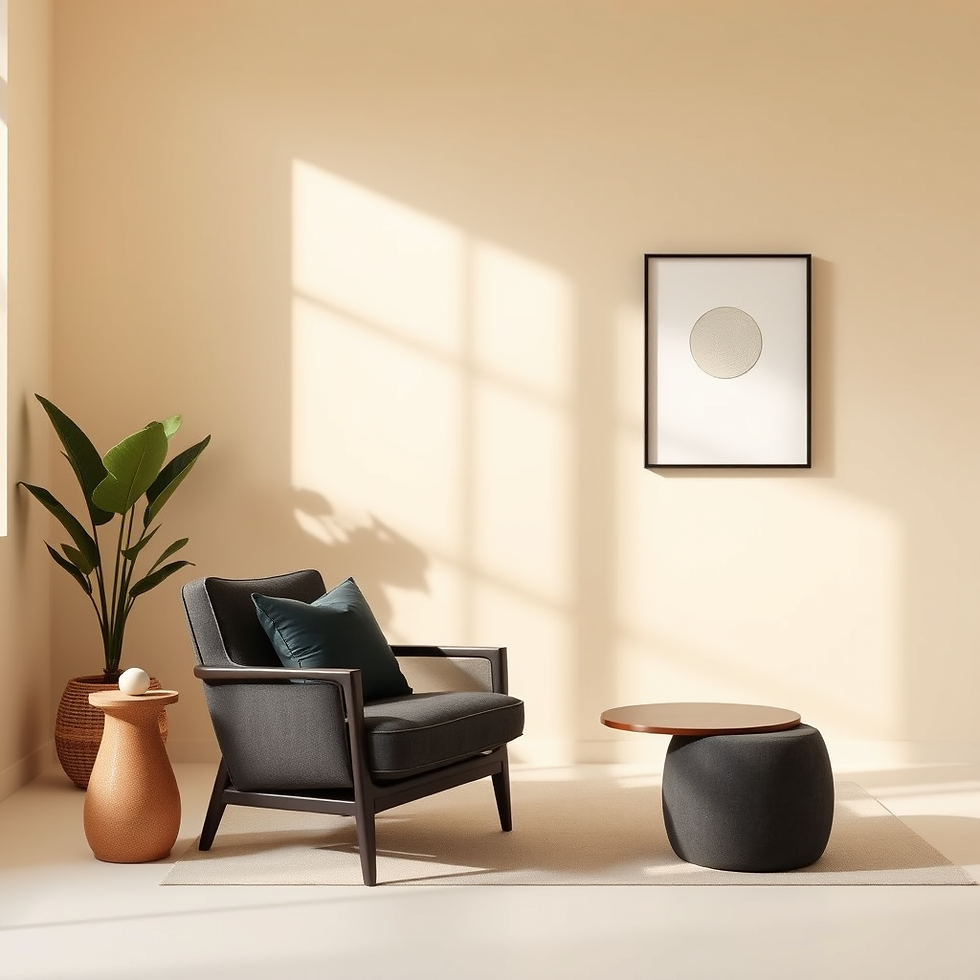
Warm Minimalism: Blending Comfort and Contemporary Style in Modern Living
- Phase Zero
- Jan 2
- 3 min read

Updated: Apr 12
Warm minimalism is redefining contemporary interiors by proving that simplicity doesn’t have to feel stark. Rooted in restraint yet rich in atmosphere, this design approach balances clean lines with tactile comfort—creating spaces that feel calm, human, and deeply livable.
As lifestyles become more fluid and home environments take on greater emotional importance, warm minimalism offers a forward-looking response: fewer distractions, better materials, and spaces that support both function and wellbeing.
What Is Warm Minimalism?
Warm minimalism combines the clarity of minimal design with the softness of natural elements. It strips away excess without stripping away personality.
At its core, it focuses on:
Intentional simplicity rather than emptiness
Natural textures instead of decorative clutter
Muted, warm palettes over high-contrast schemes
The result is a modern aesthetic that feels grounded, welcoming, and timeless.
Key Elements of Warm Minimalist Interiors
1. A Soft, Earth-Driven Color Palette
Warm minimalism leans into tones inspired by nature—think sand, clay, oat, warm grey, taupe, soft white, and muted terracotta. These hues create visual continuity and emotional ease, allowing spaces to breathe while remaining sophisticated.
Tip: Layer similar tones rather than relying on contrast to define space.
2. Natural Materials with Honest Expression
Materials are central to this style. Wood with visible grain, natural stone, linen, wool, clay, limewash, and brushed metals add depth without visual noise.
Rather than polished perfection, warm minimalism celebrates:
Subtle imperfections
Matte and tactile finishes
Materials that age gracefully
This approach aligns closely with sustainable and long-life design principles.
3. Fewer Objects, Greater Meaning
Warm minimalism is not about empty rooms—it’s about curation. Every object earns its place, whether through function, craftsmanship, or emotional value.
Instead of decorative overload:
Choose sculptural furniture
Highlight one or two art pieces
Let negative space enhance what remains
This restraint amplifies impact and clarity.
4. Comfort as a Design Priority
Unlike traditional minimalism, warmth and comfort are non-negotiable. Upholstery is generous, seating is inviting, and layouts prioritize how spaces are actually used.
Key strategies include:
Deep sofas with soft textiles
Layered rugs for acoustic and physical comfort
Lighting that creates atmosphere, not glare
Comfort is treated as a design feature, not an afterthought.
5. Thoughtful Lighting and Natural Flow
Lighting plays a crucial role in shaping mood. Warm minimalism favors:
Diffused, warm-temperature lighting
Integrated architectural lighting
Maximized daylight through open layouts and light surfaces
The goal is a seamless flow between spaces, encouraging calm movement and visual continuity.
Why Warm Minimalism Resonates Now
As homes increasingly serve multiple purposes—living, working, resting—design must support mental clarity and emotional balance. Warm minimalism answers this need by reducing visual stress while maintaining richness and character.
It also reflects a broader cultural shift toward:
Conscious consumption
Sustainable materials
Quality over quantity
Rather than following trends, warm minimalism builds spaces that endure.
Applying Warm Minimalism to Modern Living
Whether designing a private residence, apartment, or mixed-use interior, warm minimalism adapts effortlessly across scales. It works particularly well in:
Open-plan living environments
Urban homes seeking calm
Contemporary architecture that benefits from softness
The key is alignment: architecture, materials, light, and furniture working together with intention.
Final Thoughts
Warm minimalism is more than an aesthetic—it’s a mindset. By blending contemporary design with warmth, texture, and comfort, it creates interiors that feel both modern and deeply human.
In a future where quality of space matters more than quantity of things, warm minimalism stands out as a lasting, intelligent approach to modern living.


Comments