
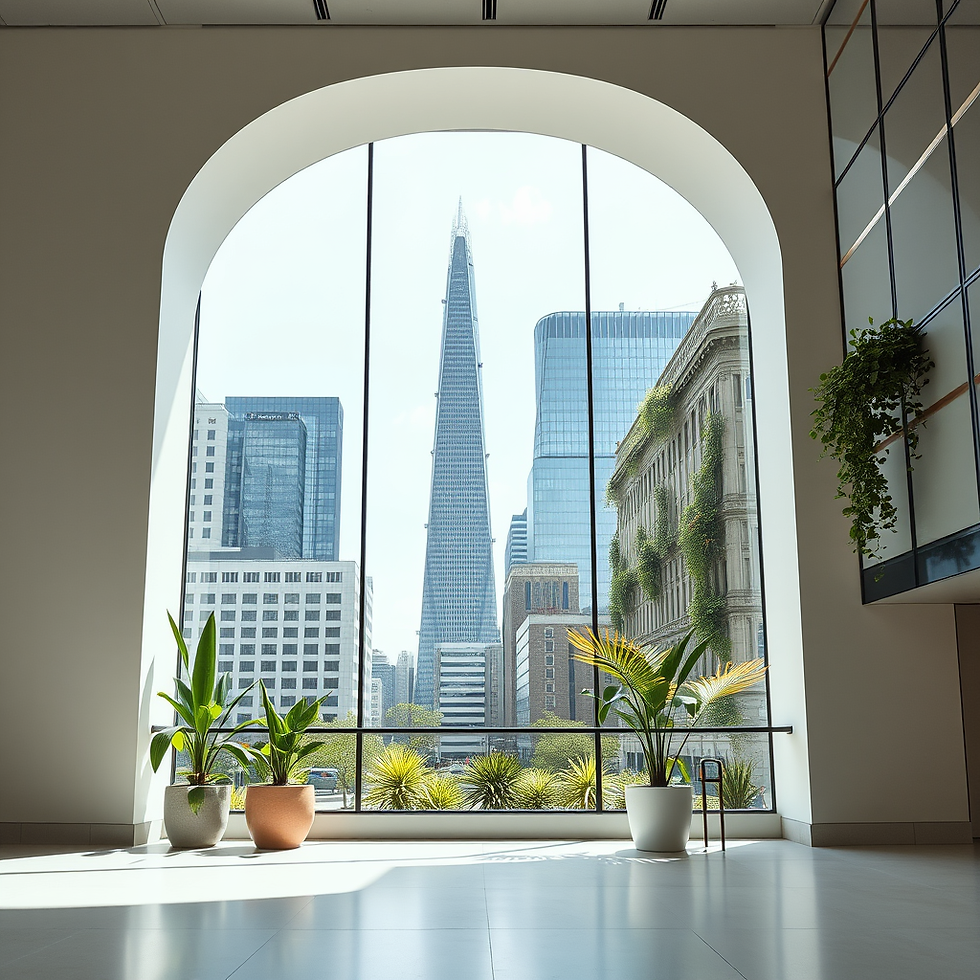
Biophilic Design in the Square Mile: Bringing Nature to Urban Workspaces in the City of London
- Phasezero Design Studio
- Dec 11, 2025
- 2 min read

Updated: May 3
The City of London, often referred to as the Square Mile, is synonymous with dense streets, towering office blocks, and relentless urban energy. While it is a global hub for business and finance, the high-density environment can make daily life feel disconnected from nature. Biophilic design is increasingly transforming this landscape, reintroducing natural elements into workspaces to improve wellbeing, productivity, and urban resilience.
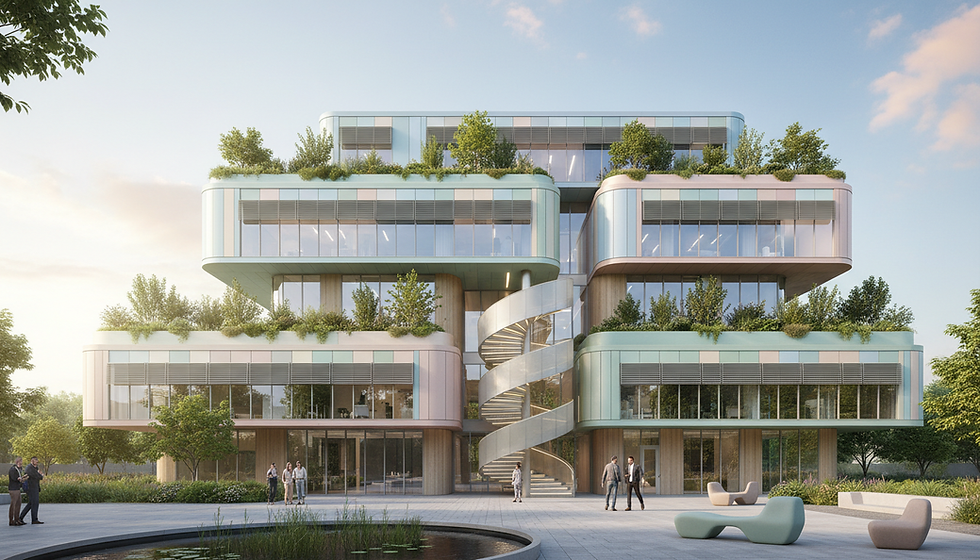
Biophilic design extends beyond simply adding plants to an office. It is an approach that embeds natural patterns, materials, and light into the very DNA of a workspace. In the City of London, where space is at a premium, creative use of terraces, atriums, green walls, and rooftop gardens allows nature to penetrate the built environment without compromising functionality. These interventions create visual and sensory connections to greenery, water, and natural light, fostering a sense of calm in otherwise high-pressure work environments.
The benefits of integrating nature into urban offices are both tangible and measurable. Exposure to greenery has been shown to reduce stress, improve focus, and boost overall wellbeing. Natural ventilation, daylight optimisation, and materials that mimic organic textures not only enhance comfort but also reduce energy consumption and support sustainability goals. In densely built areas like the Square Mile, these design strategies provide a crucial counterbalance to the urban heat island effect, helping regulate temperature and improve air quality.
Successful biophilic design in the City of London often blends aesthetics with function. Vertical gardens can act as acoustic buffers while introducing visual greenery. Water features and natural light wells enliven interiors and create dynamic, restorative spaces. Flexible layouts that integrate communal green spaces encourage social interaction and collaboration, promoting a healthier workplace culture. Even small interventions, such as natural materials, daylighting strategies, and indoor planting, can significantly enhance the quality of the workspace and connection to nature.
Biophilic design also aligns with broader urban strategies for resilience and sustainability. By integrating living systems into office buildings, developers contribute to biodiversity, stormwater management, and energy efficiency. In a borough where environmental pressures are magnified by density and commercial activity, these interventions demonstrate how design can create a healthier, more resilient urban environment.
Bringing nature into the heart of the City of London represents more than aesthetic enhancement; it signals a shift in how urban workspaces are conceived. Biophilic design transforms offices into environments that support human wellbeing, foster productivity, and reconnect people with the natural world. In the Square Mile, where the pace is fast and space is limited, integrating these principles is a step toward more sustainable, humane, and inspiring urban workplaces.

Comments