Digital Twins and Real-Time Building Performance Monitoring: The Future of Intelligent Architecture
- Phase Zero
- Jan 30
- 3 min read
In the evolving landscape of architecture and design, digital twins represent a transformative leap forward. These virtual replicas of physical buildings, powered by real-time data integration and IoT sensors, are revolutionising how we design, construct, and manage buildings throughout their entire lifecycle. At PHASEZERO Design Studio, we recognise that understanding this technology is essential for architects and designers committed to creating intelligent, responsive spaces.
What Are Digital Twins in Architecture?
A digital twin is a comprehensive virtual model of a building that mirrors its physical counterpart in real time. Unlike traditional BIM models that represent design intent, digital twins continuously evolve, incorporating live data from sensors embedded throughout the building. This includes temperature fluctuations, energy consumption, structural stress, occupancy patterns, and air quality metrics. The result is a living, breathing digital representation that provides unprecedented insights into building performance.
The integration of IoT sensors with BIM models creates a feedback loop that enables architects and facility managers to monitor, analyse, and optimise building systems in real time. This shift from static design documentation to dynamic performance monitoring fundamentally changes how we approach architectural practice.

Real-Time Monitoring: Beyond Traditional Building Management
Traditional building management systems operate reactively, addressing problems after they occur. Digital twins enable proactive management through continuous monitoring and predictive analytics. Facility managers can identify potential issues before they impact occupants, optimise energy consumption patterns, and ensure systems operate at peak efficiency.
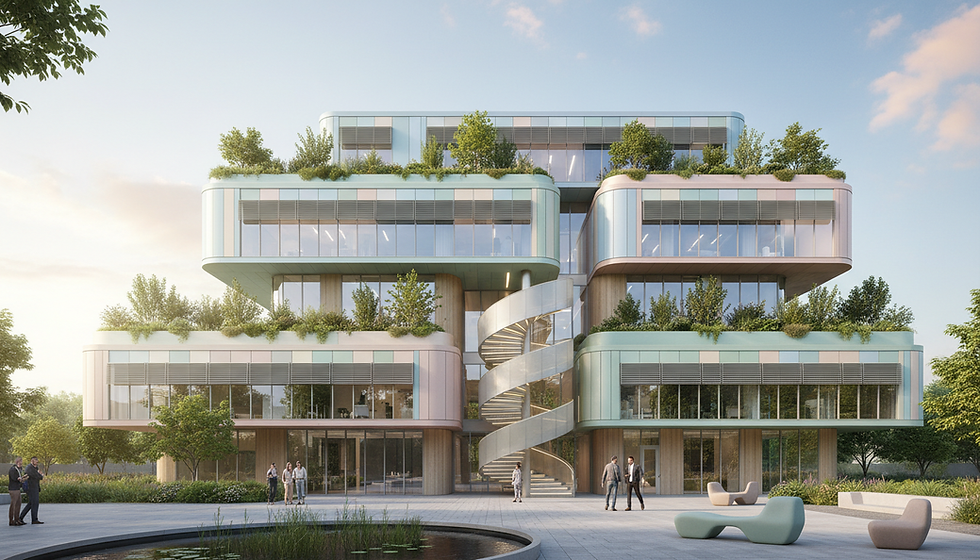
Consider a contemporary office building designed with biophilic principles and natural ventilation. A digital twin would continuously monitor air quality, temperature distribution, and occupancy patterns. If sensors detect suboptimal conditions in specific zones, the system can alert facility managers to adjust ventilation or identify design refinements for future projects. This data-driven approach transforms buildings into responsive environments that adapt to occupant needs.
Predictive Maintenance and Lifecycle Optimisation
One of the most compelling advantages of digital twins is predictive maintenance. By analysing historical data and identifying patterns, machine learning algorithms can predict when building systems will require maintenance before failures occur. This reduces downtime, extends equipment lifespan, and significantly lowers operational costs.
For architects, this means designing buildings with maintenance accessibility and system monitoring in mind from the outset. The digital twin becomes a valuable tool for understanding how design decisions impact long-term performance and operational efficiency, enabling more informed design choices that balance aesthetics with functionality.
Practical Applications in Contemporary Design
Leading cities like New York and Chicago have implemented digital twins for complex infrastructure projects. These systems monitor structural integrity, environmental conditions, and usage patterns, providing invaluable data for urban planning and building management. In the private sector, luxury residential and commercial projects increasingly employ digital twins to ensure optimal comfort and efficiency for occupants.
For interior designers, digital twins offer new possibilities for space optimisation. Real-time occupancy data can inform furniture layouts, lighting design, and material selections that enhance user experience and wellbeing. This human-centred approach, grounded in actual usage data, represents a significant evolution in how we design interior environments.

The Path Forward: Embracing Intelligent Architecture
As digital twin technology matures, architects and designers must develop new competencies in data interpretation and system integration. This doesn't diminish the importance of design intuition and aesthetic vision; rather, it augments these skills with empirical insights that validate and refine design decisions.
At PHASEZERO Design Studio, we believe that the future of architecture lies in the synthesis of thoughtful design, technological innovation, and human-centred principles. Digital twins represent a powerful tool for achieving this integration, enabling us to create buildings that are not only beautiful and functional but also intelligent and responsive to the needs of their occupants.
The buildings of tomorrow will be alive with data, continuously learning and adapting. By embracing digital twin technology today, architects position themselves at the forefront of this transformation, ready to design spaces that truly serve the people who inhabit them.