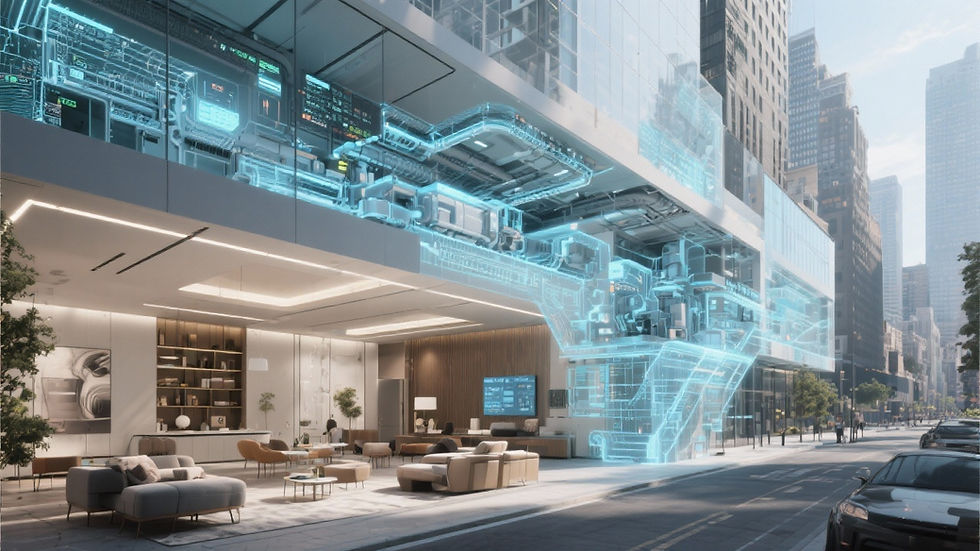
Digital Twins and BIM: Transforming Architectural Design and Building Performance
- Phase Zero
- Dec 30, 2025
- 2 min read

In contemporary architectural practice, the convergence of Building Information Modeling (BIM) and digital twin technology represents a fundamental shift in how we design, construct, and manage buildings. These interconnected technologies are not merely tools for efficiency; they embody a human-centered approach to creating spaces that perform optimally while minimizing environmental impact.
Understanding BIM and Digital Twins
Building Information Modeling has evolved from a design visualization tool into a comprehensive digital representation of a building's physical and functional characteristics. BIM integrates architectural, structural, mechanical, and electrical systems into a single, coordinated model that serves as the foundation for informed decision-making throughout the project lifecycle.
Digital twins extend this concept further by creating a dynamic, real-time virtual replica of a building that mirrors its physical counterpart. This living model continuously receives data from IoT sensors embedded throughout the structure, enabling architects and facility managers to monitor performance, predict maintenance needs, and optimize energy consumption with unprecedented precision.

Sustainability and Performance Optimization
One of the most compelling applications of BIM and digital twins lies in sustainability optimization. By integrating environmental performance metrics directly into the design model, architects can evaluate the carbon footprint, thermal efficiency, and lifecycle environmental impact of design decisions in real time. This data-driven approach enables us to make informed choices that balance aesthetic and functional aspirations with genuine environmental responsibility.
Once a building is operational, digital twins provide continuous insight into actual performance versus predicted performance. This feedback loop allows for adaptive management strategies that respond to real-world conditions, occupancy patterns, and seasonal variations. The result is buildings that not only meet sustainability targets but continuously improve their environmental performance throughout their operational life.
Enhanced Collaboration and Risk Mitigation
BIM fundamentally transforms how multidisciplinary teams collaborate. By providing a shared, coordinated digital environment, BIM eliminates the silos that traditionally separate architectural, structural, and systems design. This integrated approach reduces conflicts, minimizes costly rework, and ensures that all design decisions are informed by comprehensive understanding of their implications across all building systems.
The predictive capabilities of digital twins extend this collaborative advantage into the operational phase. Facility managers, building operators, and maintenance teams gain access to real-time insights that enable proactive rather than reactive management. This shift from reactive maintenance to predictive maintenance not only reduces operational costs but also enhances occupant comfort and safety.

The Human Element in Digital Innovation
While BIM and digital twins are powerful technological tools, their true value emerges when they serve human-centered design goals. These technologies enable architects to move beyond intuition toward evidence-based design that prioritizes occupant wellbeing, accessibility, and comfort. By understanding how people actually experience and interact with spaces, we can design environments that are not only beautiful and sustainable but genuinely responsive to human needs.
At PHASEZERO Design Studio, we embrace BIM and digital twin technology as essential components of our design philosophy. These tools enable us to deliver calm, contemporary architecture that achieves clarity in design intent, excellence in craftsmanship, and genuine environmental stewardship. By combining technological sophistication with human empathy, we create spaces that endure and inspire.