
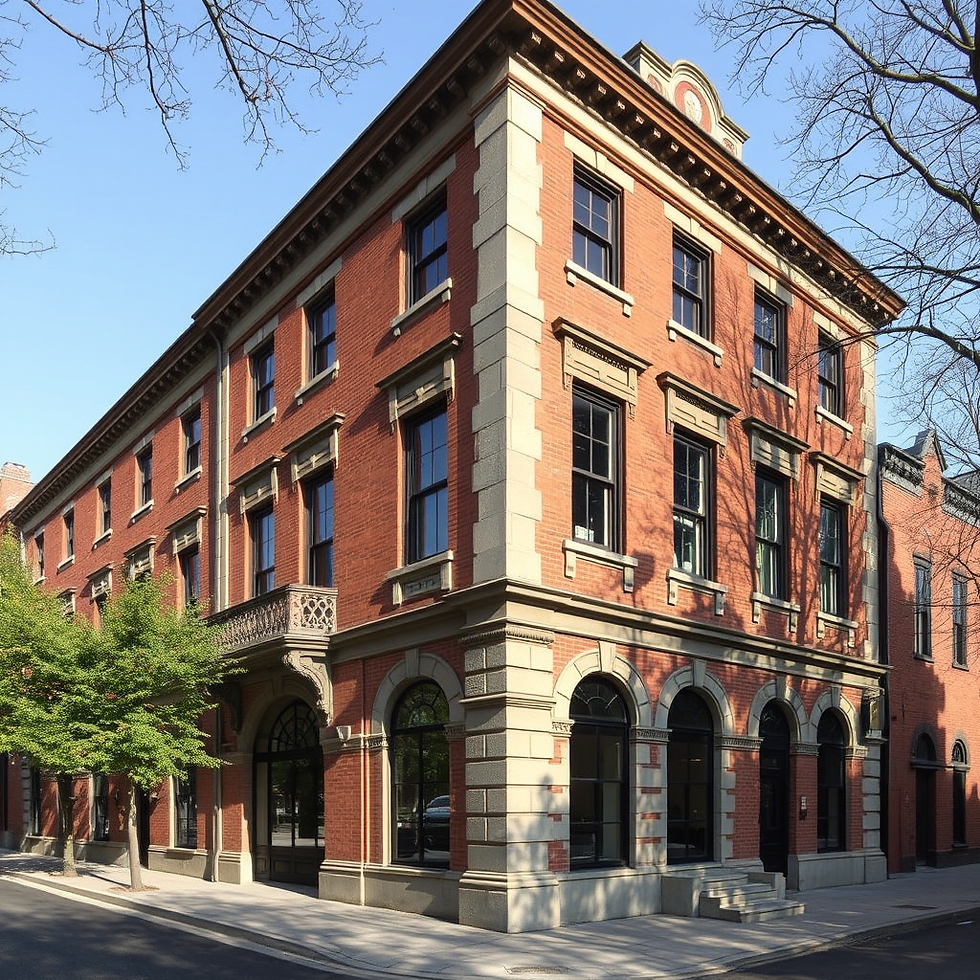
Invisible Innovation: Modern Technology in Historic Building Restoration
- Phasezero Design Studio
- Jan 8
- 2 min read

Updated: May 17
Historic buildings present a unique paradox: they embody irreplaceable cultural value and architectural beauty, yet many struggle to meet contemporary standards for comfort, efficiency, and accessibility. The solution lies not in replacing these structures, but in thoughtfully integrating modern technology that enhances their performance while preserving their essence.

The Technology Revolution in Heritage Restoration
Modern restoration projects increasingly employ invisible innovations—technologies that work behind the scenes to improve energy efficiency, structural integrity, and user experience without altering the building's visible character. These advances represent a fundamental shift in how we approach heritage conservation.
Advanced Insulation Systems
Vacuum insulation panels (VIPs) and aerogels represent breakthrough materials that provide exceptional thermal performance in minimal thickness. Unlike traditional insulation, these systems can be installed within existing wall cavities without requiring external modifications that would compromise historic facades. Nano-silica technology offers similar benefits, allowing buildings to achieve modern energy standards while maintaining their original appearance.
Smart Climate Control
Advanced HVAC systems and chilled-beam technology provide precise environmental control without visible ductwork. These systems can be integrated into historic buildings through careful planning and sensitive installation, often hidden within existing structural elements or installed in non-visible areas.
The PHASEZERO Approach
At PHASEZERO, we view technology as a tool for enhancement, not replacement. Our approach involves detailed analysis of each building's specific needs, followed by careful selection of technologies that deliver maximum benefit with minimum visual impact. We believe that invisible innovation allows historic buildings to serve contemporary needs whilst maintaining the integrity that makes them valuable.
Looking Forward
As technology continues to evolve, the possibilities for sensitive heritage restoration expand. The challenge lies in staying informed about emerging solutions and applying them with the same thoughtfulness that guided the original architects. When technology serves heritage rather than replacing it, we create buildings that are both historically significant and genuinely liveable for contemporary users.

Comments