
Retrofit-First Architecture: Balancing Heritage with Net-Zero Carbon Goals in Westminster
- Phasezero Design Studio
- Dec 8, 2025
- 2 min read

Updated: May 3
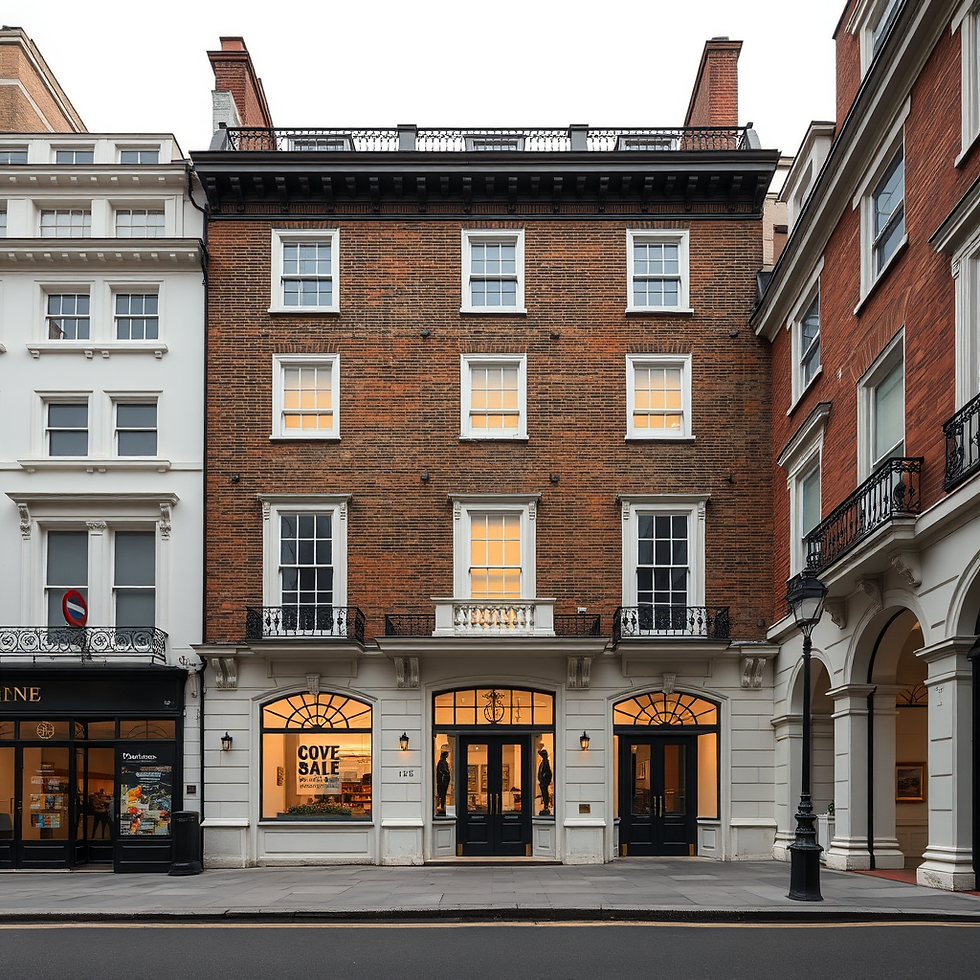
Westminster, one of London's most historically significant boroughs, presents a unique architectural challenge. Its streets are lined with listed buildings, iconic civic structures, and centuries-old terraces, all of which contribute to the borough's character and identity. At the same time, the pressing need to reduce carbon emissions and meet net-zero targets requires bold, forward-looking solutions. Retrofit-first architecture offers a pathway that reconciles these two priorities, allowing Westminster to modernise sustainably without compromising its heritage.
Retrofit-first architecture prioritises upgrading and adapting existing buildings rather than demolishing and rebuilding. In Westminster, this approach is especially relevant, as many structures cannot be replaced due to historical, cultural, or planning constraints. By focusing on the careful improvement of building envelopes, heating and cooling systems, and energy efficiency, retrofit strategies can significantly reduce carbon footprints while preserving architectural integrity.
Heritage conservation and sustainability are not mutually exclusive. Thoughtful retrofitting considers the original materials, proportions, and detailing of historic buildings, integrating modern energy solutions in ways that are minimally intrusive. Insulation, double-glazing, low-carbon heating systems, and renewable energy installations can be applied sensitively, maintaining façades and interior features while enhancing performance. This approach ensures that Westminster's streets retain their character even as buildings operate more efficiently.
Beyond energy efficiency, retrofit-first design in Westminster supports broader environmental and social objectives. Upgraded buildings improve indoor comfort and air quality, contributing to residents' wellbeing, while adaptive reuse strategies reduce the environmental impact associated with new construction. By rethinking underutilised offices, civic buildings, or residential blocks, architects can create flexible, multi-purpose spaces that respond to changing urban demands without resorting to demolition.
The benefits extend to urban resilience as well. Retrofit projects often incorporate flood mitigation, passive cooling, and sustainable drainage measures, helping Westminster adapt to climate challenges. Public engagement is equally important, as residents and stakeholders must be part of the process to ensure that retrofitting respects the borough's identity and meets community needs.
Westminster's path to net-zero relies on strategies that are both practical and respectful of its historic environment. Retrofit-first architecture exemplifies this balance, proving that sustainability and heritage conservation can reinforce each other. By investing in the careful upgrading of existing buildings, the borough can reduce carbon emissions, extend the life of its architectural assets, and create spaces that are comfortable, resilient, and future-ready.
As Westminster continues to evolve, retrofit-first architecture provides a roadmap for a city where the past and the future coexist harmoniously. It demonstrates that preserving history does not have to come at the expense of environmental ambition, offering a model for other historic urban centres seeking to achieve net-zero carbon goals without losing their distinctive identity.


Comments