
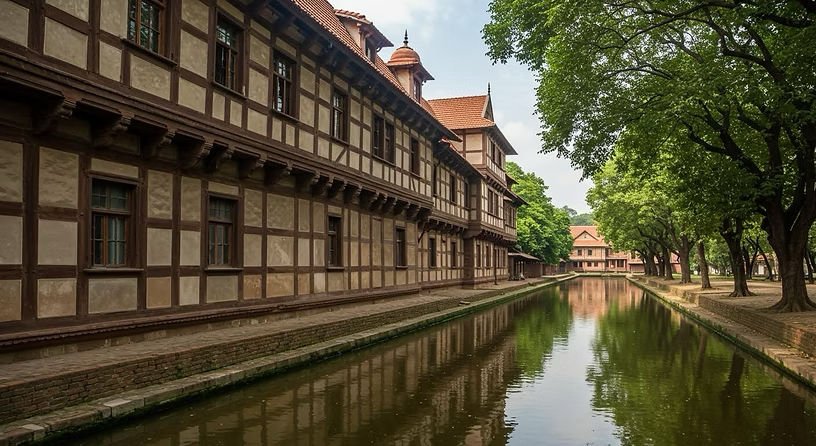
Sustainable Heritage: Natural Materials and Resilience in Historic Renovation
- Phasezero Design Studio
- Jan 3
- 2 min read

Updated: May 2
In an era of climate uncertainty and environmental urgency, historic building renovation has emerged as one of the most sustainable practices available to architects and developers. By preserving existing structures and restoring them with natural materials and resilient design principles, we create buildings that serve both heritage and environmental imperatives.
The Embodied Carbon Advantage
The most sustainable building is often the one already standing. Renovation projects consume significantly fewer new materials than demolition and new construction, dramatically reducing embodied carbon—the environmental cost of manufacturing and transporting building materials. This fundamental principle makes heritage restoration one of the most effective climate mitigation strategies available.
Natural Materials and Timeless Design
Historic buildings were often constructed with natural materials—timber, stone, clay, lime mortar—that have proven their durability over centuries. Modern restoration increasingly returns to these time-tested materials, complemented by contemporary understanding of their properties. Timber, in particular, offers exceptional sustainability credentials: it sequesters carbon, requires minimal processing, and can be sourced responsibly from managed forests.
When we restore a building with natural materials, we're not just preserving heritage—we're making a statement about sustainable design that transcends trends and fashions.
Climate Resilience and Adaptive Capacity
Historic buildings often demonstrate remarkable resilience. Their solid construction, thermal mass, and proven performance through centuries of climate variation provide inherent advantages. Modern restoration can enhance this resilience through thoughtful interventions: improved drainage systems to manage flooding, passive cooling strategies that reduce reliance on mechanical systems, and flexible interior spaces that can adapt to changing uses.
In flood-prone areas, the demand for historic building restoration is growing as communities recognise that existing structures often provide better resilience than new construction.
Preservation as Pollution Control
The restoration of iconic structures like the Taj Mahal demonstrates how heritage conservation can address environmental challenges. Careful cleaning and protective treatments preserve these buildings whilst managing pollution impacts. This approach extends the lifespan of structures and reduces the need for resource-intensive replacements.
Community and Social Sustainability
Sustainability extends beyond environmental metrics. Historic building restoration strengthens communities by preserving cultural identity, supporting local economies through skilled trades, and creating vibrant mixed-use neighbourhoods. These social dimensions of sustainability are equally important as carbon reduction.
The PHASEZERO Philosophy
At PHASEZERO, we approach every restoration project with a commitment to natural elegance and environmental responsibility. We select materials for their durability, beauty, and sustainability. We design interventions that enhance rather than diminish the building's inherent qualities. We believe that the most beautiful design is often the most sustainable—clarity of purpose, honest materials, and timeless aesthetics create buildings that endure.
Building a Sustainable Future
As we confront climate change and resource scarcity, historic building restoration offers a proven path forward. These projects demonstrate that sustainability and beauty are not competing values but complementary ones. By restoring heritage buildings with natural materials and resilient design principles, we create spaces that serve contemporary needs whilst honouring the past and protecting the future.
Every restored building is a statement: that we value what has endured, that we understand the environmental cost of new construction, and that we believe in creating spaces that will serve generations to come.


Comments