
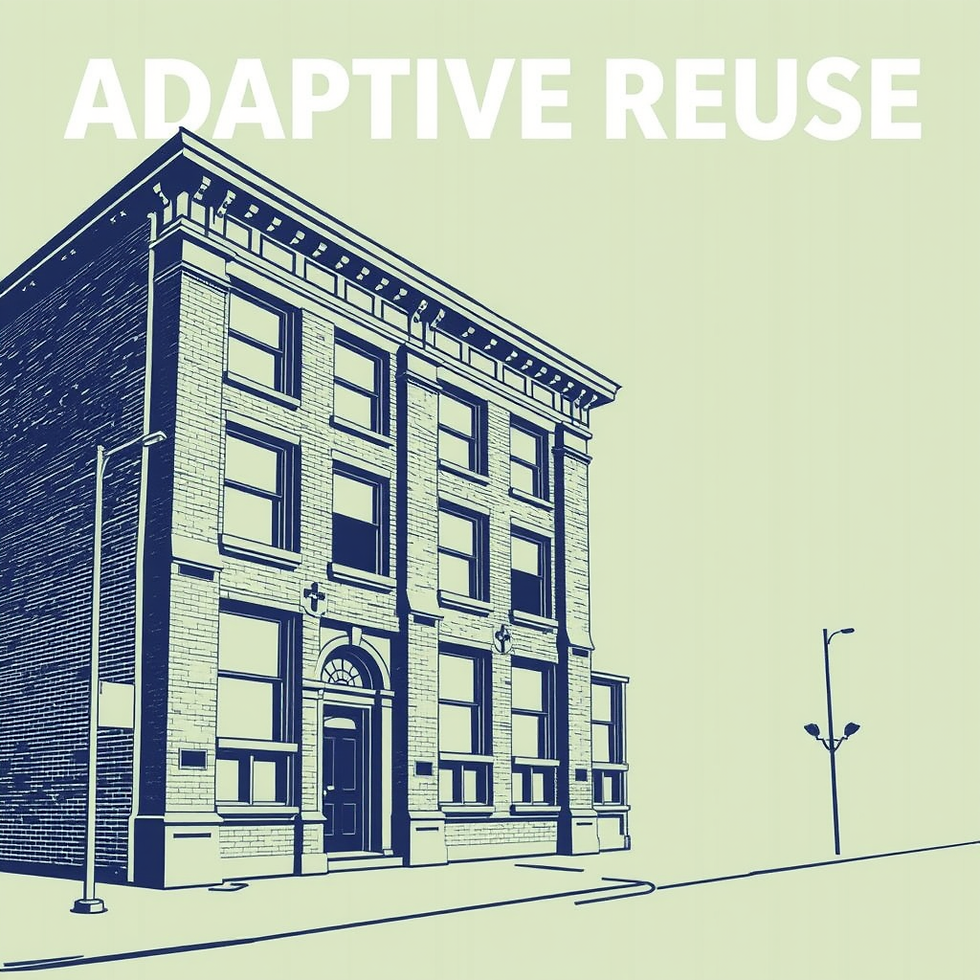
Adaptive Reuse: Breathing New Life into Historic Structures
- Phasezero Design Studio
- Jan 9
- 2 min read

Updated: May 17
In the heart of our cities and countryside, historic buildings stand as silent witnesses to generations past. Yet many face an uncertain future—abandoned, deteriorating, or simply no longer suited to their original purpose. Adaptive reuse offers a compelling solution: transforming these architectural treasures into thriving spaces that serve modern communities while preserving their irreplaceable character.

What is Adaptive Reuse?
Adaptive reuse is the process of repurposing historic buildings for new functions while retaining their cultural heritage value and architectural integrity. Rather than demolishing a Victorian warehouse to build a shopping centre, adaptive reuse might transform that warehouse into luxury apartments, creative studios, or a vibrant food hall. This approach sits at the intersection of sustainability, cultural preservation, and economic viability.
The Human-Centred Approach
At PHASEZERO, we believe adaptive reuse is fundamentally about people. It's about creating spaces where communities can gather, work, and thrive. When we approach a historic building, we ask: What stories does this structure hold? How can we honour its past while creating a meaningful future? This empathetic lens guides every decision—from material selection to spatial planning.
Economic and Environmental Benefits
Beyond cultural preservation, adaptive reuse delivers tangible benefits. Economically, historic buildings in high-demand areas appreciate 30-40% in value following thoughtful renovation. Environmentally, reusing existing structures dramatically reduces embodied carbon compared to demolition and new construction. A renovated building consumes fewer new materials and generates less waste, making it inherently more sustainable.
Design Innovation Meets Heritage
The most successful adaptive reuse projects balance respect for heritage with bold design innovation. This might mean introducing contemporary materials and systems within historic shells, creating striking contrasts that celebrate both eras. At PHASEZERO, we approach each project with clarity and craftsmanship. We study the building's original intent, understand its structural systems, and identify which elements deserve preservation and which can evolve.
The Path Forward
As we face housing shortages, climate challenges, and the need to strengthen community bonds, adaptive reuse becomes increasingly vital. These projects remind us that the most sustainable building is often the one already standing. By breathing new life into historic structures, we create spaces that serve contemporary needs whilst honouring the craftsmanship and vision of previous generations.

Comments